HISTORY
The History department embodies our whole school mission statement by developing well-rounded and enthusiastic learners who think critically about the world they inhibit.
They will be able to see a range of perspectives and to view these perspectives critically. The subject will develop their vocabulary, literacy and oracy skills, alongside building effective learning habits to achieve excellent academic outcomes creating learners who are open-minded, have a concern for others and are able to use their knowledge rich History curriculum to access the world around them.
As a result of this, the department has put together a curriculum that allows for these skills to be built. We have ensured that there is a diverse approach to curriculum, drawing on our own experience of History at school, which was primarily British and later European focussed. We have ensured that the curriculum does not just repeat the topics of GCSE and A-Level but approaches them with topics which can build period, substantive and geographical knowledge, without repetition. Moreover, we have thought about our ‘gold standard’ historians – those who we send off to university to study History. Where students do not pursue the subject beyond Key Stage Three, we have ensured they have studied key topics such as the end of democracy on Weimar Germany and the Holocaust which enable them to access the world around them. The department follows the National Curriculum with Year 8 following the statements that apply to pre-1901 and Year 9 following global issues and the twentieth century world.
To achieve this, the department has put together a curriculum that allows for these skills to be built. We have looked to ensure the students we teach go away with a wider breadth of knowledge that enables them to access the world around them. To do this we have used strategies such as Meanwhile, Elsewhere which enables us to naturally weave diversity into the curriculum. This enables us to ensure that students learn about a range of voices and perspectives across the curriculum. Moreover, when thinking about our ‘gold standard’ historians, we have thought about how we can ensure they have the skills to be as good as any of their undergraduate peers and given them opportunities to engage in academic reading and thinking before they leave us. We ensure students have access to a wide range of academic reading and high-level resources, including Massolit and JSTOR. We have increased the inclusion of substantive concepts. We have mapped back the substantive concepts that are needed for each examination unit. Alongside this we have attached a second order concept to each unit, mapping them out throughout Key Stage Three to ensure students are exposed to them and are able to develop their understanding of these. We hope if students are secure in these concepts by the time they get to GCSE/A-Level, they will be able to access broad, balanced and ambitious knowledge rich curriculum.
key stage 3
Aims of the curriculum area
• To develop a genuine interest and enthusiasm for the study of past events and people.
• For students to realise that the world of the present was formed by the events of the past and that the ripples of their effects continue to effect the world of the future.
• By studying events, choices, decisions of the past students will be able to reflect upon, assess and better understand the world and community they live in.
• To promote the development of historical skills such as problem solving, communication, debating, reasoning and organisational skills.
• To help students to better understand the various cultures of the world.
• To develop the many different forms of literacy. Our lessons encourage students to improve their reading, writing, visual and information literacy
teaching methods
The department uses a range of methods including:
• Debate and structured discussion
• Independent research
• Role play
• Presentations
• Developing hypotheses and testing
• Examination of historical sources
• Use of educational visits to develop understanding – we take students to the battlefields and memorial sites of World War One in Belgium and France. We also visit the Black County Museum to explore life in the Industrial Revolution
• Peer assessment
key stage 3 curriculum outline
• At Key Stage 3 students follow the National Curriculum. Our learners will explore medieval worlds, the changing nature of Britain between 1066 and 1990. We also explore key world events such as the Holocaust, the Industrial Revolution and the Civil Rights Movement.
Year 8
• Focusses on the development society. It starts with medieval England and finishes with the Industrial Revolution, focussing on the changes that takes place within society and government.
Year 9
• Focusses on the evolution of a Modern World. Topics include further study on the World Wars, the Holocaust and how rights have changed, including Civil Rights and Women’s rights.
• Students will also experience the key concepts that underpin the discipline of History, these include ; cause and consequence, significance, change and continuity and interpretations.
• Students will also learn skills which will prepare them for further academic study – such as information analysis and extended writing.
KEY STAGE 4
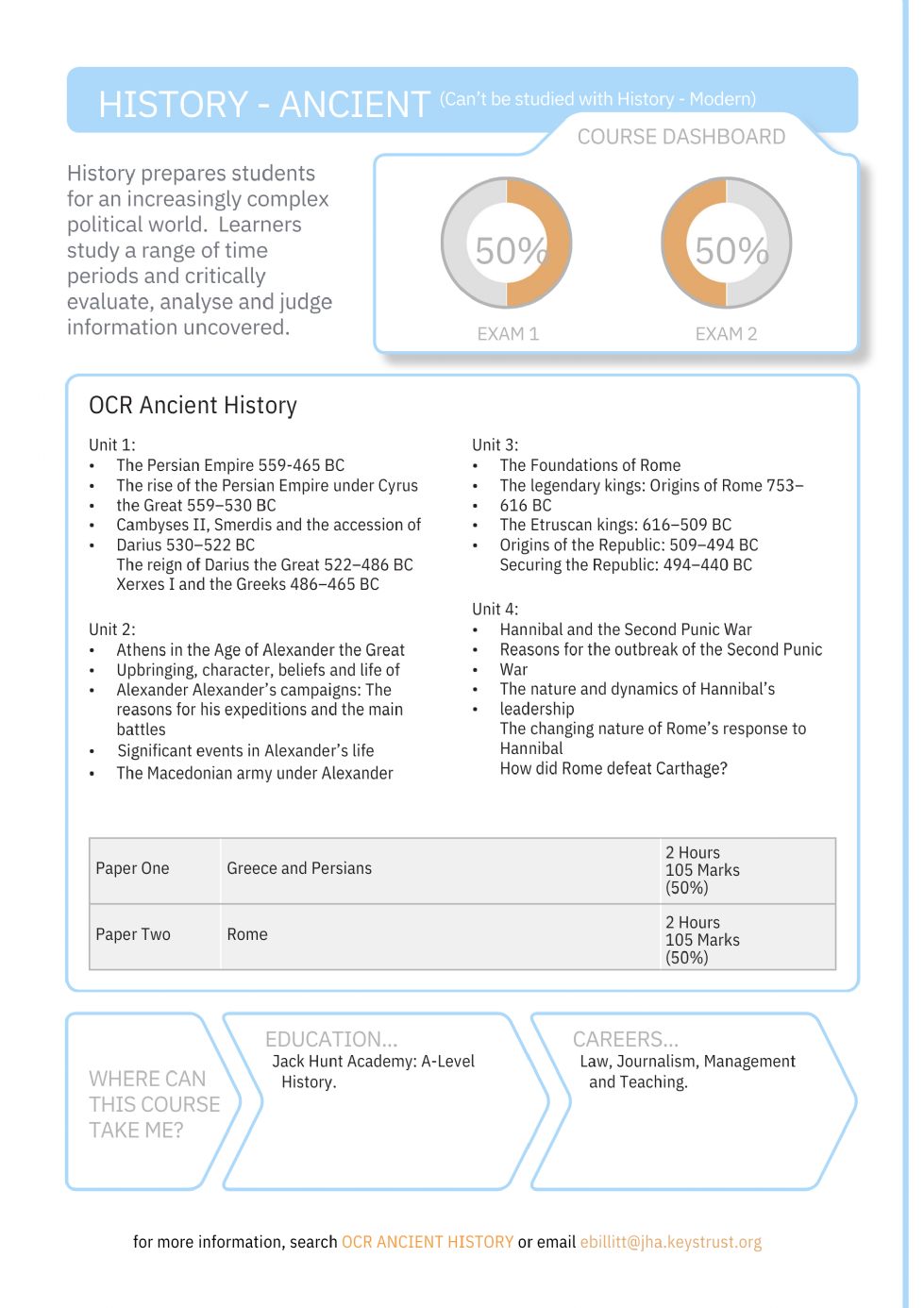
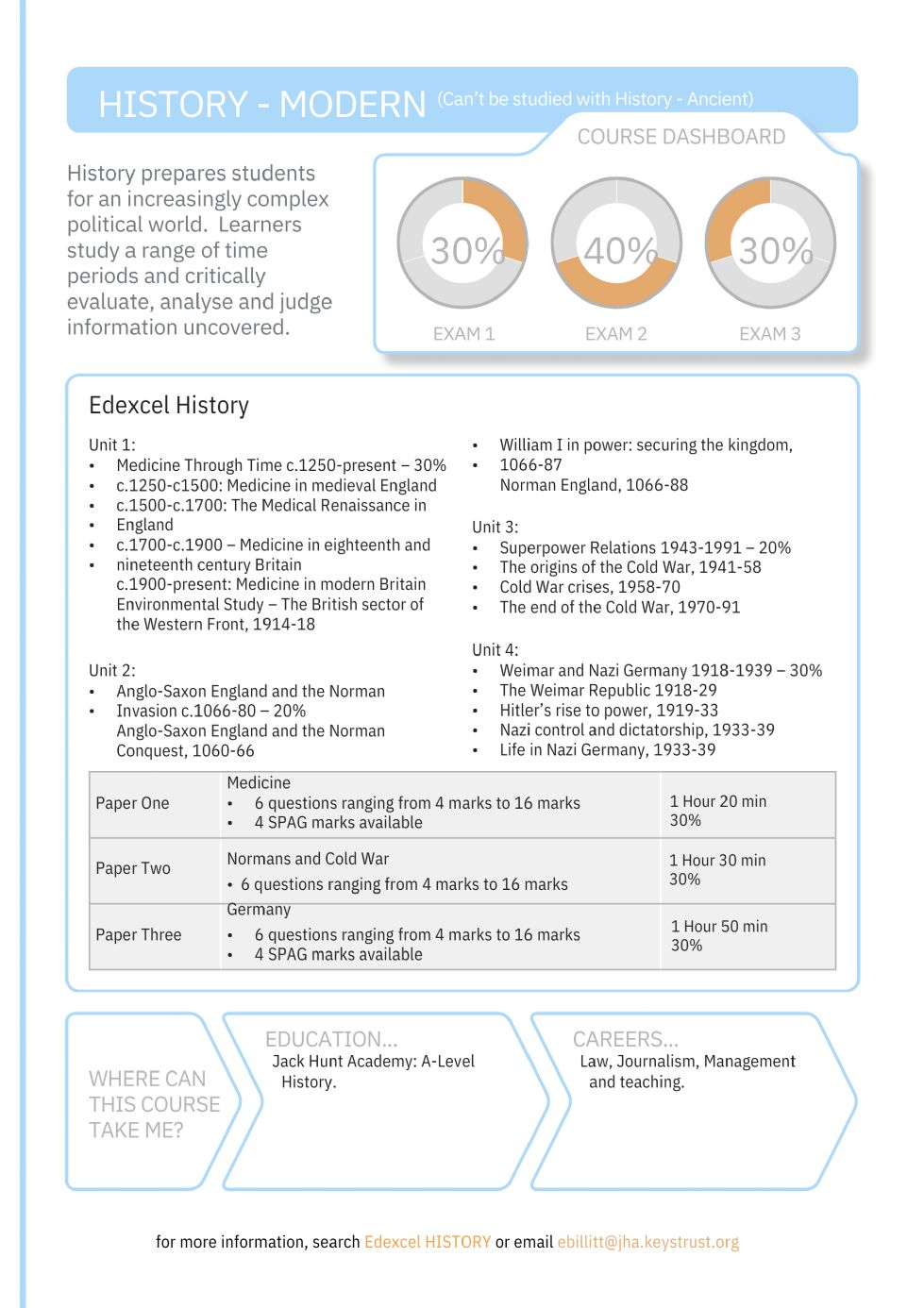
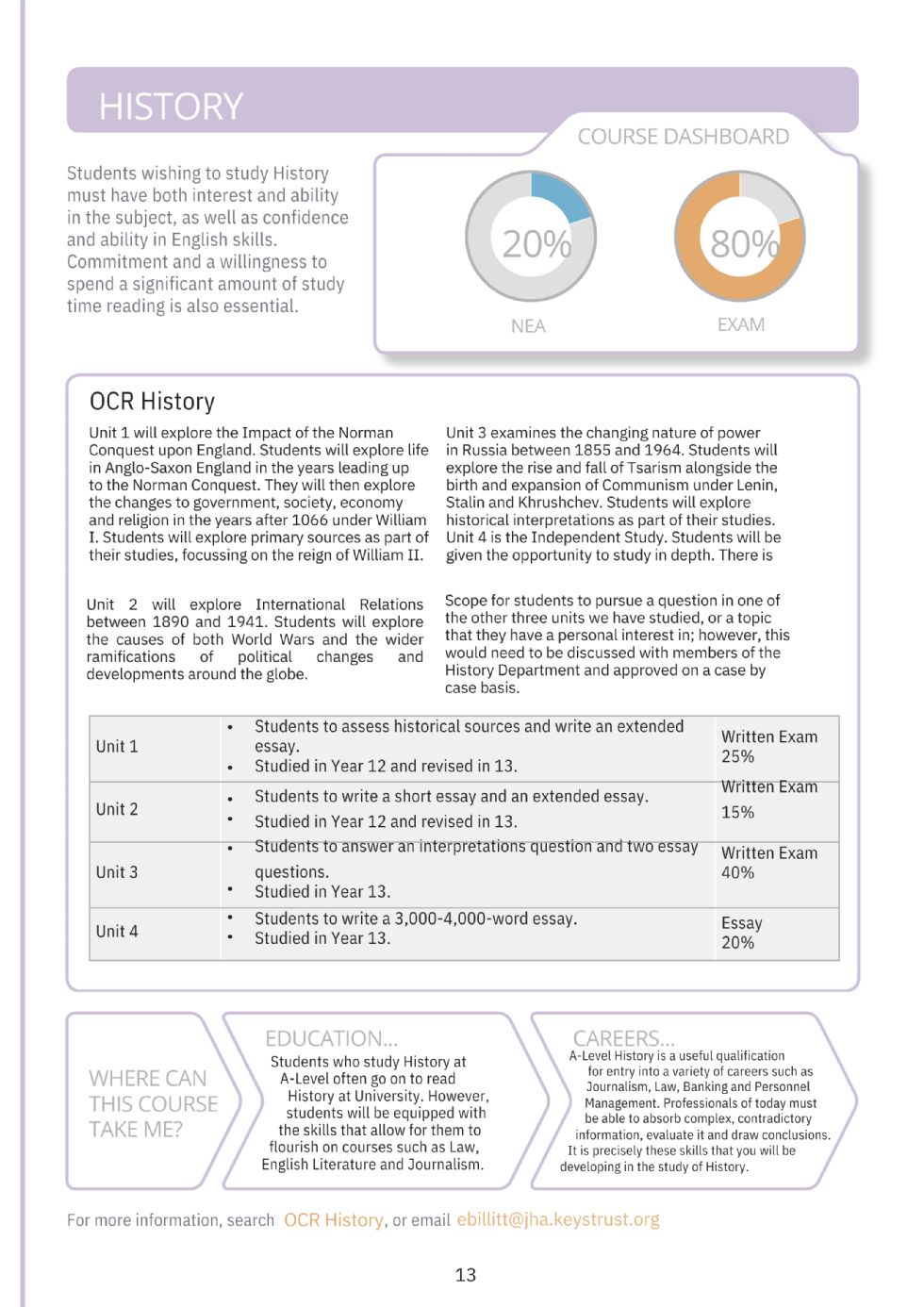
KEY STAGE 5