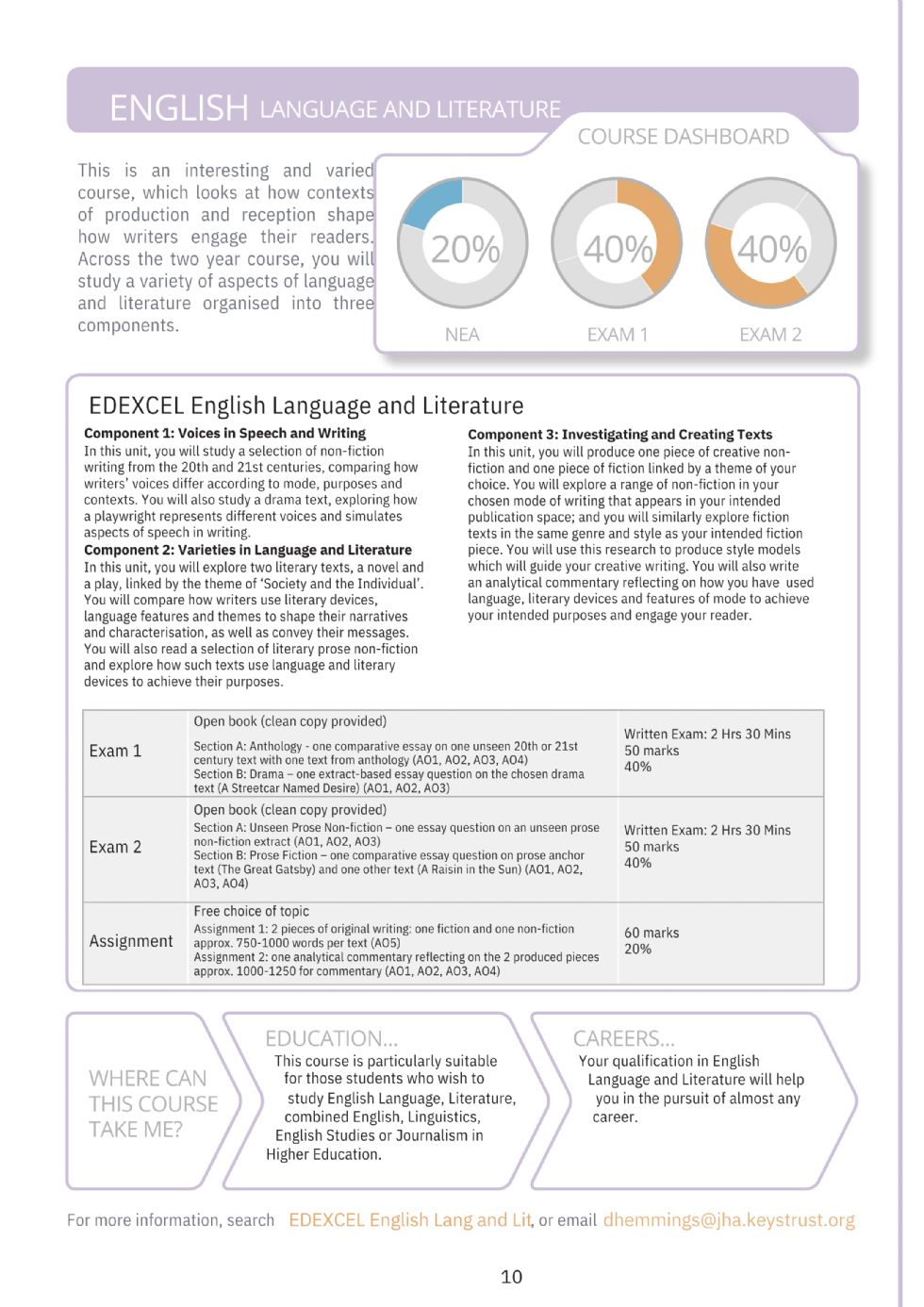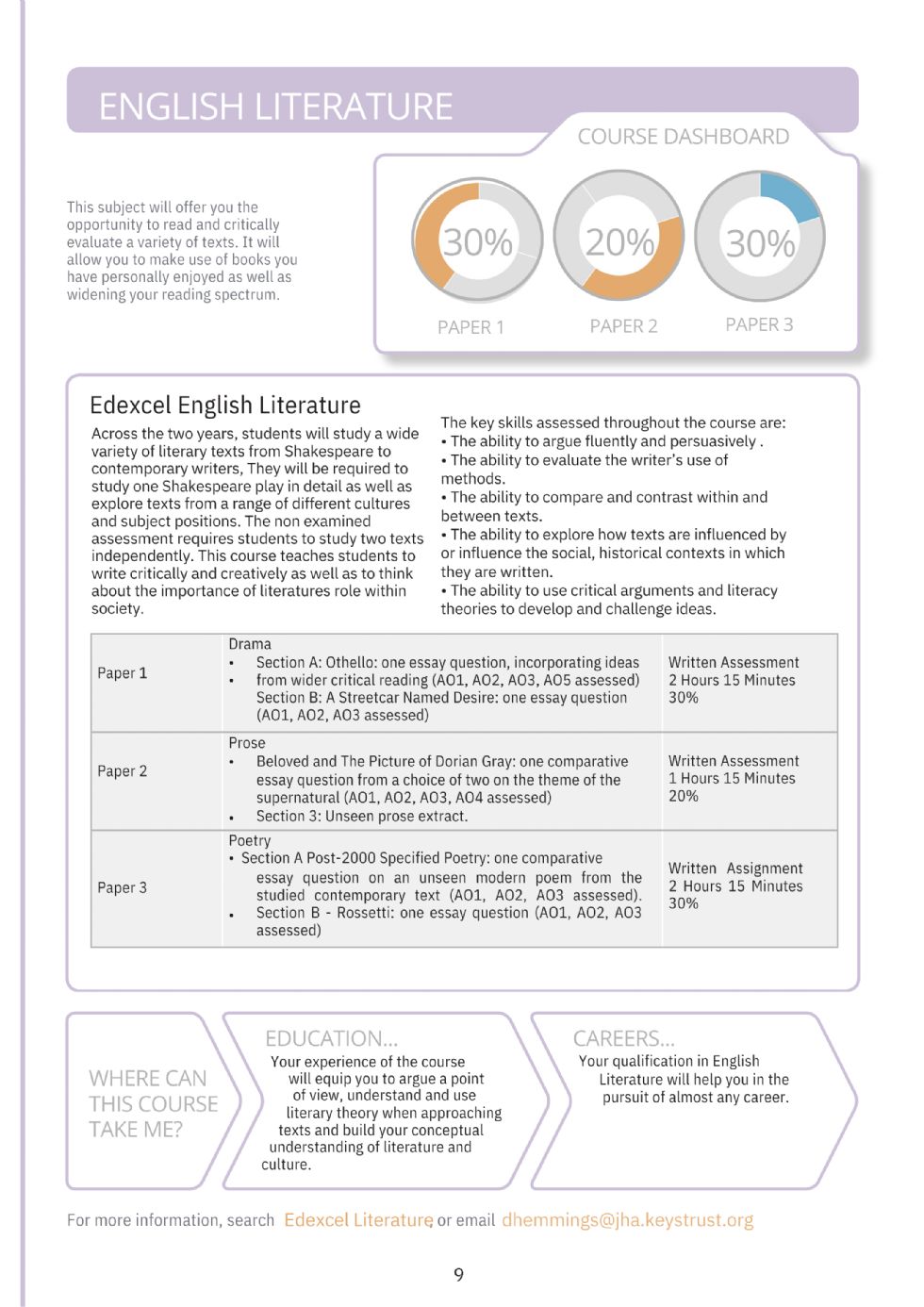

ENGLISH
In the English department at Jack Hunt Academy, we want our curriculum to challenge students rigorously, exposing them to a range of literature as well as non-fiction texts to broaden their knowledge of the world around them. Through the lens of differing opinions and stories, we strive to support their journey to developing their own character and embed an ambitious range of key knowledge to propel students towards excellence and to enable them to achieve their aspiration.
We believe that to be an English scholar, students thrive best when exposed to a range of semantics, vocabulary, structures, rhetoric, and characters to grow their awareness of the subject as well as to inspire them to achieve their aspirations. Through explicit teaching, we strive to challenge students to infer, analyse, evaluate, and create based on their learning of these core concepts which underpin our curriculum.
To instil strong learning habits, we have developed classroom environments in which the dignity of our students is valued because everybody is encouraged to have a voice to further their learning. We understand the role of oracy in developing writing skills and follow Mary Myatt’s mantra: “writing floats on a sea of talk”. To further strengthen this, we promote writing stamina through our ‘Big Write’ weeks in Key Stage 3 and timed exam paragraphs in Key Stage 4, as well as timed essays in Key Stage 5.
KEY STAGE 3
AIMS OF THE CURRICULUM AREA
• To deliver a knowledge-engaged curriculum that builds on knowledge and skills from KS2 and prepares students for KS4, GCSE exams, and beyond.
• To develop students to become well-rounded, lifelong learners through a focus on awareness, aspiration, and excellence.
• To ensure a strong foundation in the fundamentals of English while offering opportunities to enhance cultural capital and experience a wide range of voices.
• To make English an active, safe, and enjoyable subject in which all students can participate and achieve.
• To challenge every individual to reach their full potential.
TEACHING METHODS
• Lessons have been planned to address our eight key concepts: aspiration, awareness, character, figurative language, narrative, rhetoric, structure and vocabulary. Lessons will involve explicit technical proficiency practice, and will revolve around a key text. Lessons will involve teacher modelling and scaffolding and incorporate school wide Cold Calling and Think, Pair, Share strategies.
• Student progress will be continuously monitored with a balance of low-stakes weekly quizzes and inclass checks through intentional circulation and checking for understanding.
• Intervention will be targeted through individualised support, targeted feedback, and small group teaching when appropriate.
RESOURCES
• A wide range of novels, poetry collections, plays, short stories and non-fiction texts are used throughout KS3 to ensure students are exposed to different voices within texts.
• Students also have access and are directed to utilise Bedrock Vocabulary, including some directed lesson time.
• Students are encouraged to utilise the library to continue independent reading as well as make use of lunchtime book clubs (e.g. Carnegie) to promote a love of reading.
KEY STAGE 3 CURRICULUM OUTLINE
• Students will study a continuum of both English literature and the English language throughout history with focuses on key areas, such as the Renaissance, the Romantic period, the Victorians, and contemporary society in year 7 before studying a range of themes that are crucial for enjoyment and understanding in English.
• Grammar, punctuation, and style analyses and practice are incorporated throughout all lessons in KS3.
• Each unit will feature fiction, non-fiction, and poetry with a blended approach to reading and writing.
• Knowledge taught in each unit will be applicable beyond specific texts and will be revisited throughout the year, ensuring that students can connect and apply their learning. Skills development from applying the knowledge learnt will progress through the years; year 7 has a greater focus on comprehension in comparison with years 8 and 9 which explore further analysis, evaluation and comparison.
• Extended writing will be completed once every three weeks in KS3, alternating between creative and analytical forms.
OTHER ACTIVITIES
• Opportunities for theatre visits are provided throughout the age ranges when possible.
• Opportunities to celebrate literature or engage in clubs such as National Poetry Day, World Book Day, the school magazine, and other initiatives that follow student interest are all possible and encouraged.
key stage 4
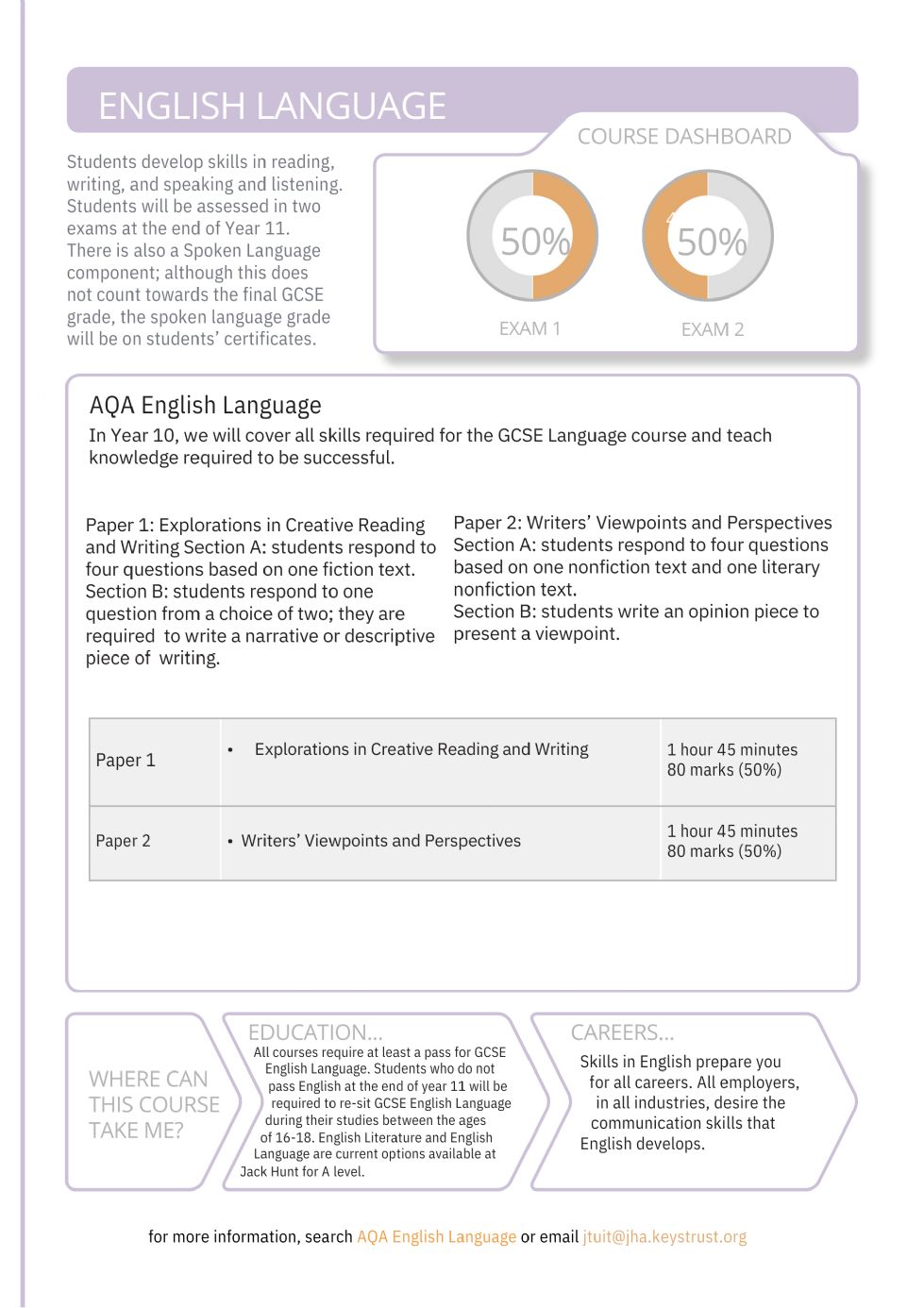
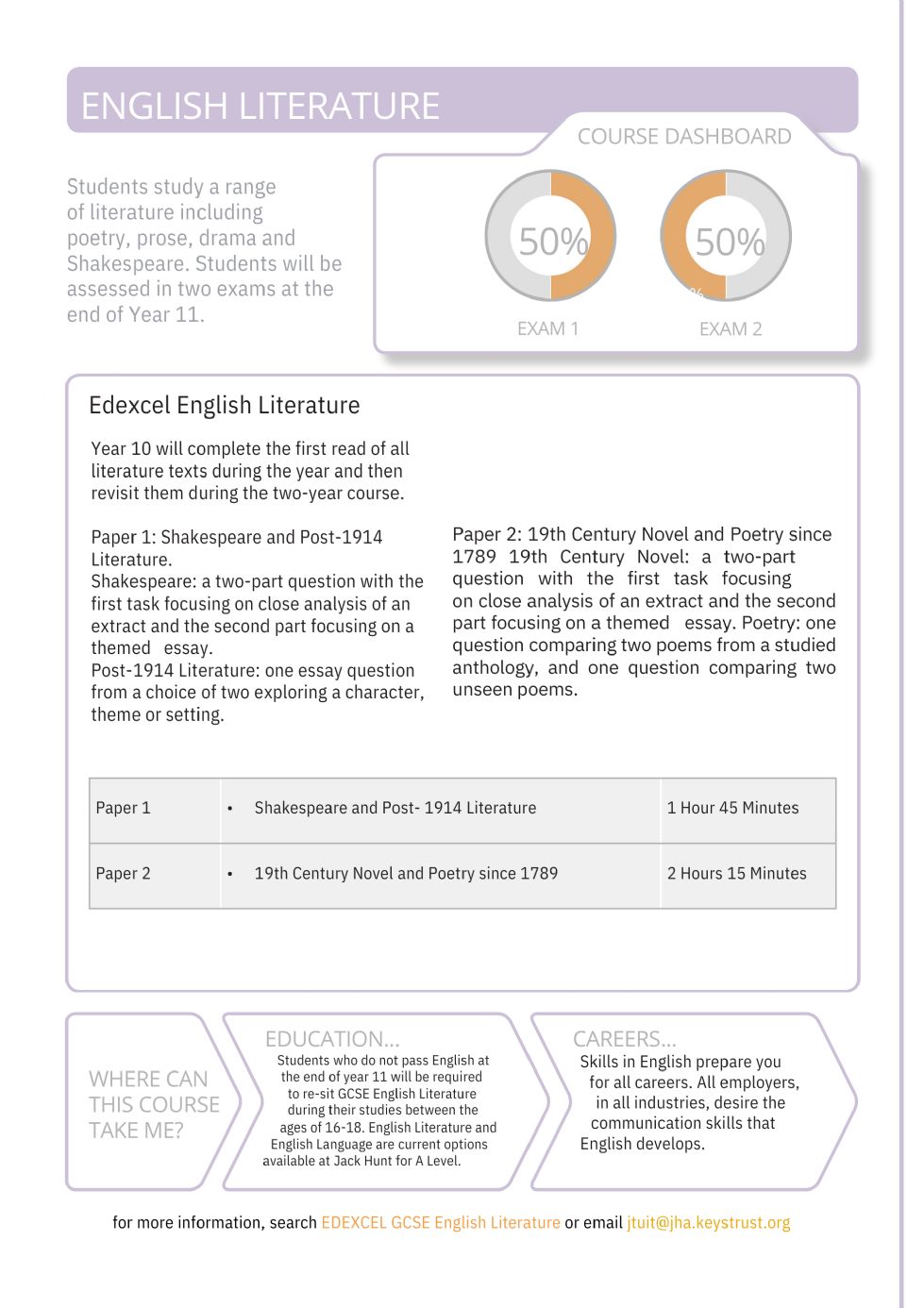
key stage 5